How to spot good makhana before you buy
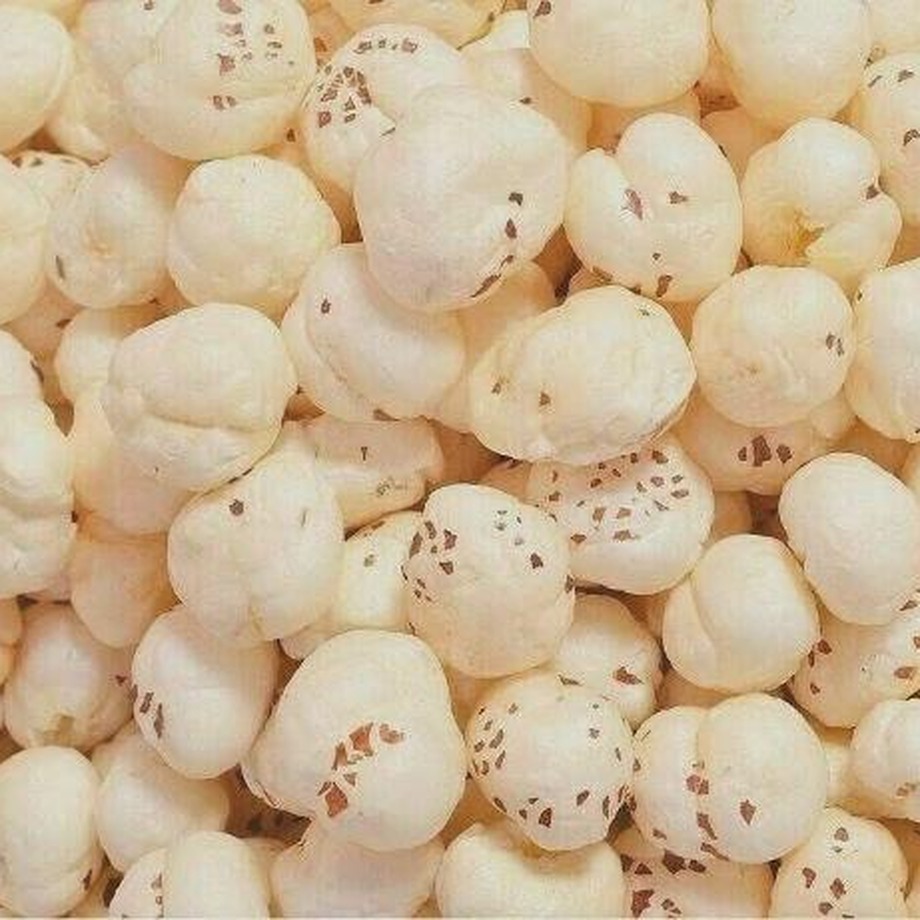
Good makhana is light, evenly sized, white to cream in colour, smells clean and snaps when you press it. Tired makhana is small and broken, dull or yellowed, smells musty and bends instead of breaking. Here is how to tell the difference in under a minute — in the shop, or the moment your pack arrives.
Why makhana quality varies so much
Makhana (fox nut, Euryale ferox) is a water crop, and almost all of it comes from one place: Bihar grows nearly three-fourths of India’s makhana and around 80–85% of the world’s supply, mostly in the Mithila and Kosi regions. “Mithila Makhana” even carries a Geographical Indication (GI) tag for its quality and the traditional knowledge behind it.
The traditional process is still largely done by hand. According to ICAR, the seeds are roasted in earthen or cast-iron pans at 250–320 °C, rested for two to three days, roasted again and then popped with a wooden mallet — a few seconds’ delay and the pop comes out poor. So every batch varies in size, colour and how fully each seed has puffed. What decides the quality of your pack is how carefully it was sorted afterwards.
1. Size: look for full, even pops
Pour a handful into your palm. Good makhana pops are round, fully puffed and roughly the same size. Warning signs:
- A mix of big and small pops in the same pack — it hasn’t been graded.
- Flat, half-opened pops that never puffed properly.
- Lots of broken halves and crumbs at the bottom.
India’s official Agmark grades for makhana are “Special” and “Standard” — “jumbo” and “premium” aren’t among them, so don’t rely on those words alone. Look for a pack that states a size. At Kashvee every pop is graded by hand: Jumbo is 19 mm and up, Classic is 15.85 mm and up, and no broken or small pieces go in the pack.
Which size should you buy?
Bigger isn’t automatically better — it depends on how you eat it:
- For snacking straight from the jar, roasting with ghee and spices, or gifting, larger pops are the treat: more crunch per bite, and they look generous in a bowl.
- For kheer, curries and everyday cooking, a slightly smaller, even size works just as well, because the pops soak up milk or gravy anyway.
Whichever size you choose, the pops in one pack should match each other. Even sizing is what tells you someone actually sorted the batch.
2. Colour: white to cream, with a few natural specks
India’s official Agmark standard for makhana says it should be “white or cream colour”. Small reddish-brown specks are normal — they are bits of the seed’s outer coat, which the standard asks to be removed “as much as possible”, not completely.
Be wary of:
- Grey, dull or yellowed pops — a sign of age or poor storage.
- Large dark or black patches.
3. Smell and taste: clean, never musty
Open the pack and smell it. Good makhana has a mild, pleasant aroma — the Agmark standard describes it as “sharp and sweet” — and it must be free from “rancid taste” and “musty odour”. If it smells stale, damp or oily, don’t eat it, however good it looks.
4. Crunch: it should snap, not bend
Press one pop between your thumb and finger. Fresh makhana cracks and crumbles cleanly. If it squashes, bends or feels chewy, it has picked up moisture from the air — it has gone soft and will taste flat.
Moisture matters enough that the official grade standard caps it: at most 10% for the “Special” grade and 12% for “Standard”. You can’t measure that at home, but the snap test tells you most of what you need to know.
5. What shouldn’t be in the pack
Tip the pack gently and look at the bottom and the corners. The Agmark standard says makhana must be free from insects, mould, webs, filth and added colour, and allows no inorganic matter (like grit or stones) at all. At home, look out for:
- Tiny insects, webbing or holes in the pops.
- Dust, grit, or loose chunks of black shell (tiny specks on the pops are fine; pieces rattling around the pack are not).
- White powdery patches that could be mould.
Any one of these is a reason to return the pack to the seller.
6. Read the label
A few seconds with the label saves a lot of disappointment:
- FSSAI licence number. Look for it on the pack, and look it up on FSSAI’s FoSCoS portal if you want to check who made it.
- Ingredients. Plain makhana should list one ingredient: makhana (fox nuts). If you see oil, salt or flavourings, it’s a flavoured snack, not plain makhana.
- Dates. Check the packing date and the best-before or shelf-life line.
- How it was made. “Plain roasted” means no frying and nothing added.
For example, Kashvee’s label reads “plain roasted fox nuts (phool makhana)”: single ingredient, no added preservatives, vegan, gluten free, a shelf life of 12 months, and FSSAI Lic. No. 10426110000066.
Keeping it crisp at home
Makhana goes soft when it sits open to the air. After opening:
- Press the pouch shut every time, or move the makhana to a dry, airtight jar.
- Keep it in a cool, dry cupboard, away from the stove and sunlight.
- Always use a dry spoon or dry hands.
If it has softened, don’t throw it away: dry-roast it in a pan on low heat for 3–5 minutes, stirring, until a pop snaps again. Let it cool fully before you close the jar.
Quick checklist
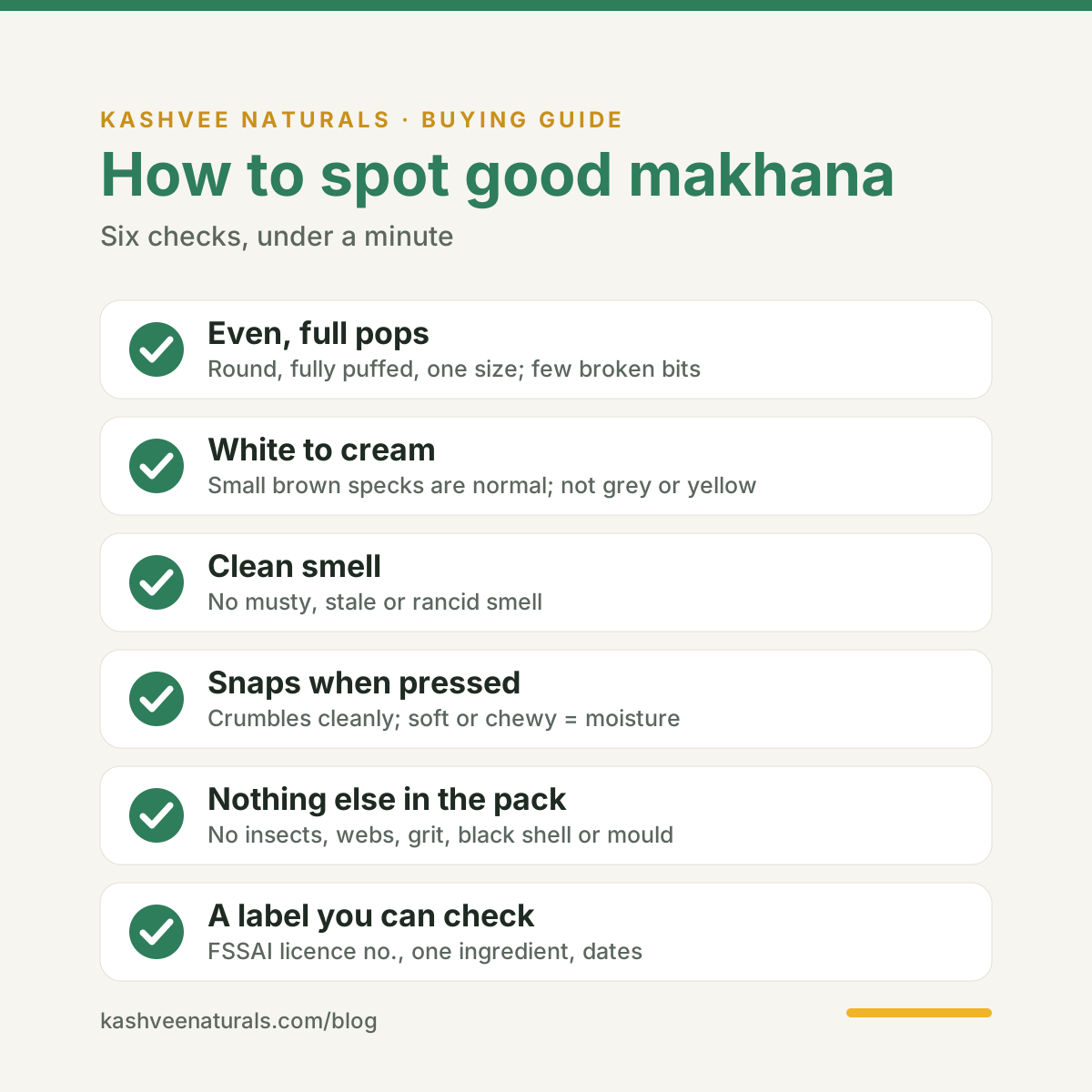
Good makhana passes all six. If yours doesn’t, you’re paying for filler — and you deserve better. See how Kashvee grades its makhana →
Sources
- India’s Makhana Sector: Traditional Crop to Global Superfood — Press Information Bureau, Government of India (19 August 2026)
- Makhana Grading and Marking Rules, Schedule II: Grade designations and definitions of quality of Makhana (Agmark) — via Warehousing Development and Regulatory Authority
- Mechanizing Makhana Popping — Indian Council of Agricultural Research (ICAR)
- FoSCoS — Food Safety Compliance System, FSSAI