Makhana for vrat: staple + 4 easy recipes
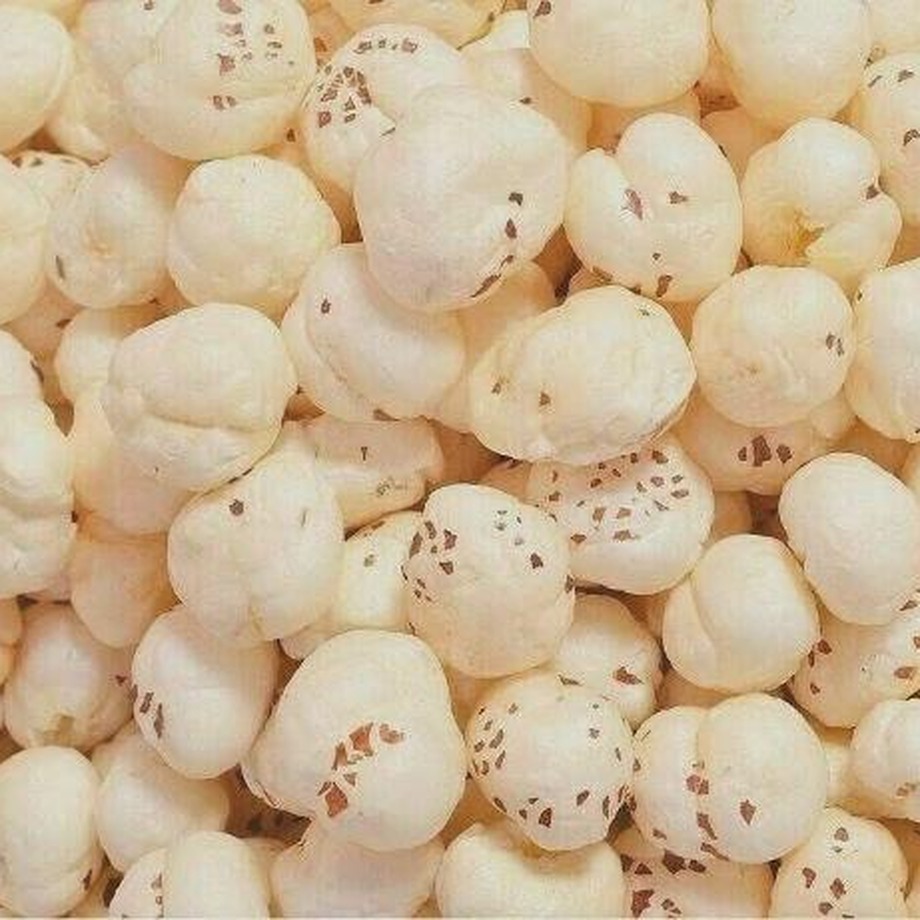
Makhana is a vrat staple because it is light, quick to cook, and fits naturally into many Indian fasting kitchens. It can become a salty snack, a sweet kheer, or a simple meal bowl without needing onion, garlic, wheat or rice.
Sharad Navratri begins on Sunday, 11 October 2026 in the New Delhi panchang. Papankusha Ekadashi follows on Thursday, 22 October 2026 — a good time to stock up and plan a few easy vrat recipes.
Why makhana is so useful during vrat
During Navratri, Ekadashi and other family fasts, every home has its own rules. Some families take only fruit and milk. Some include sabudana, sama rice, kuttu, singhara, potatoes, peanuts, curd and makhana. So before using any recipe, follow the fasting rules you observe at home.
That said, makhana is one of the easiest ingredients to adapt because it is a popped seed of the aquatic crop Euryale ferox, commonly called fox nut or gorgon nut. It is not a cereal grain, and it works well in both sweet and savoury vrat dishes.
FSSAI’s festival-season advisory specifically mentions makhana among food items whose demand rises during fasting periods, along with samvat rice, kuttu, singhara, fruits, vegetables, dry fruits, milk products and ready-to-eat savouries. That matches what we see in many homes: a jar of makhana is often kept ready for quick evening snacks, kheer, or a simple curd-based bowl.
Nutritionally, published food-science sources describe makhana as carbohydrate-rich, low in fat, and containing moderate protein. That does not make it a “complete meal” by itself. For a more satisfying vrat plate, pair it with curd, milk, peanuts, fruits or potatoes, depending on what your fast allows.
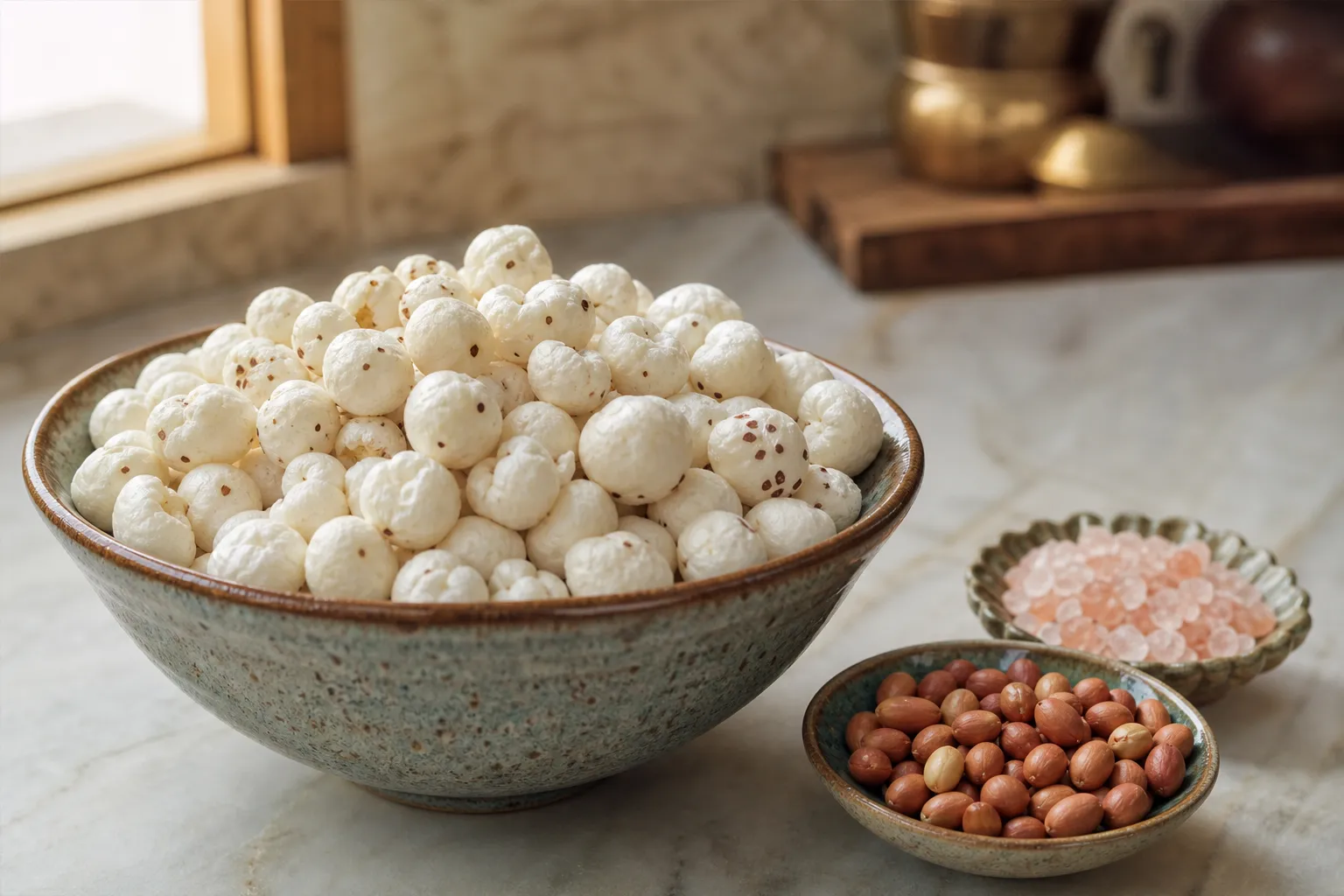
If you are buying makhana for the festive season, choose clean, whole pops with a fresh smell and a crisp bite. We have a detailed guide here: How to spot good makhana before you buy.
Illustration
Before you start: vrat cooking notes
Use these recipes as a flexible base.
- Use sendha namak instead of regular salt if that is your fasting practice.
- Avoid onion, garlic and regular masalas for traditional vrat cooking.
- Use ghee if your family allows it. For a vegan version, use a neutral fasting-friendly oil only if it fits your rules.
- Roast makhana on low heat. It can brown quickly outside while staying chewy inside if the flame is too high.
- Add makhana late in wet recipes if you like some bite; simmer longer if you prefer it soft.
Kashvee plain makhana is a single-ingredient pack of white popped kernels, with nothing added and no added preservatives. For snacks and kheer, Classic Makhana works well; for larger pops and a more premium festive bowl, choose Jumbo Makhana.
Recipe 1: 10-minute vrat roasted makhana namkeen
This is the simplest Navratri or Ekadashi snack: crisp, salty, and easy to make just before tea.
Ingredients
- 2 cups makhana
- 1 teaspoon ghee
- 2 tablespoons peanuts, optional
- 8–10 curry leaves, optional and only if your fast allows
- ¼ teaspoon black pepper powder
- ½ teaspoon roasted cumin powder
- Sendha namak to taste
- A pinch of sugar, optional
Use Kashvee Jumbo Makhana — Shop →
Method
Warm ghee in a heavy pan on low flame. Add peanuts first and roast until they turn crisp. Add makhana and keep stirring for 6–8 minutes, until the pops become crunchy. Break one piece to check: it should snap, not feel chewy.
Switch off the flame. Add pepper, cumin, sendha namak and a tiny pinch of sugar. Toss well while the pan is still warm. Let it cool for a few minutes before serving.
Make it better
If you are packing this for the office or travel, let it cool completely before closing the box. Warm makhana releases steam, and trapped steam can make it soft.
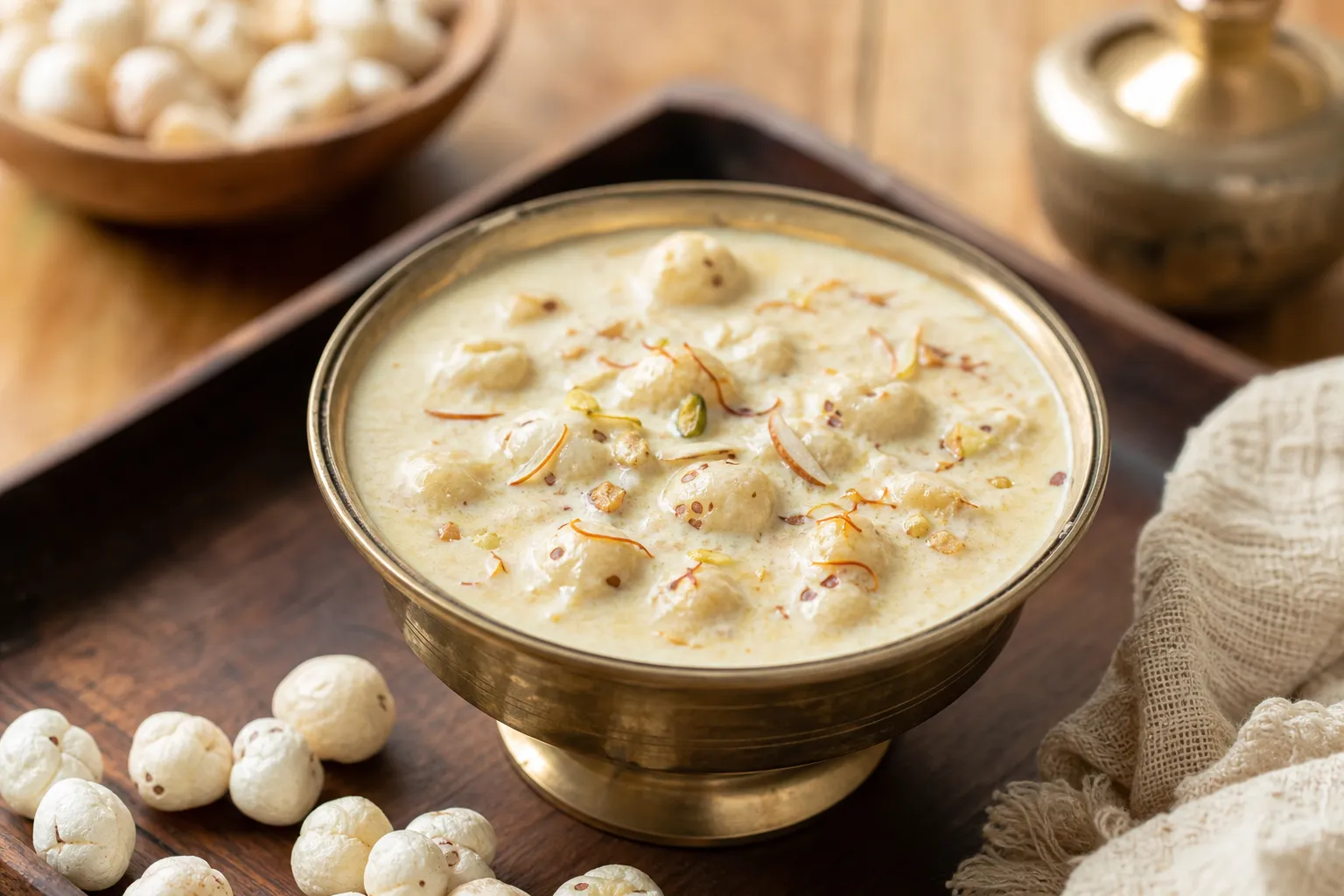
Recipe 2: Makhana kheer for Navratri prasad
Makhana kheer is gentle, festive and easy to make in a small batch. It is also a good recipe when you want one sweet dish without using rice.
Ingredients
- 1 cup makhana
- 3 cups milk
- 1–2 tablespoons sugar, jaggery powder or mishri, as per taste
- 1 tablespoon chopped almonds or cashews, optional
- ½ teaspoon cardamom powder
- A few saffron strands, optional
- 1 teaspoon ghee
Use Kashvee Jumbo Makhana — Shop →
Method
Roast makhana in ghee on low flame for 4–5 minutes. Cool slightly, then crush half the makhana roughly with your hands or a rolling pin. Keep the rest whole for texture.
Boil milk in a thick pan. Add the crushed and whole makhana. Simmer for 10–12 minutes, stirring often, until the milk thickens slightly and the makhana softens. Add sugar or mishri and cook for another 2 minutes. Finish with cardamom, nuts and saffron.
Serve warm, or chill it for a thicker kheer.
Small tip
If using jaggery powder, switch off the flame and let the kheer cool for a few minutes before adding it. This reduces the chance of milk splitting.
Illustration
Recipe 3: Vrat aloo-makhana dahi curry
This is a light curry for days when you want something more meal-like with sama rice, vrat poori, or just a bowl of curd on the side.
Ingredients
- 1½ cups makhana
- 2 medium boiled potatoes, cubed
- 1 cup curd, whisked
- 1 teaspoon ghee
- ½ teaspoon cumin seeds
- 1 green chilli, slit, optional
- ½ teaspoon grated ginger, optional
- ¼ teaspoon black pepper powder
- ½ teaspoon roasted cumin powder
- Sendha namak to taste
- ½ cup water, more if needed
- Fresh coriander, optional
Use Kashvee Jumbo Makhana — Shop →
Method
Dry roast the makhana for 5–6 minutes and keep aside. In another pan, heat ghee. Add cumin seeds, green chilli and ginger. Add boiled potatoes and sauté for 2 minutes.
Lower the flame completely. Add whisked curd slowly, stirring all the time so it does not split. Add water, black pepper, roasted cumin and sendha namak. Simmer for 3–4 minutes.
Add roasted makhana at the end and cook for 2–3 minutes if you want it slightly crisp, or 6–7 minutes if you like it soft and curry-soaked. Garnish with coriander if allowed in your fast.
Make it lighter
Use more curd and less potato if you want a tangier bowl. Use more potato and less water if you want a thicker curry.
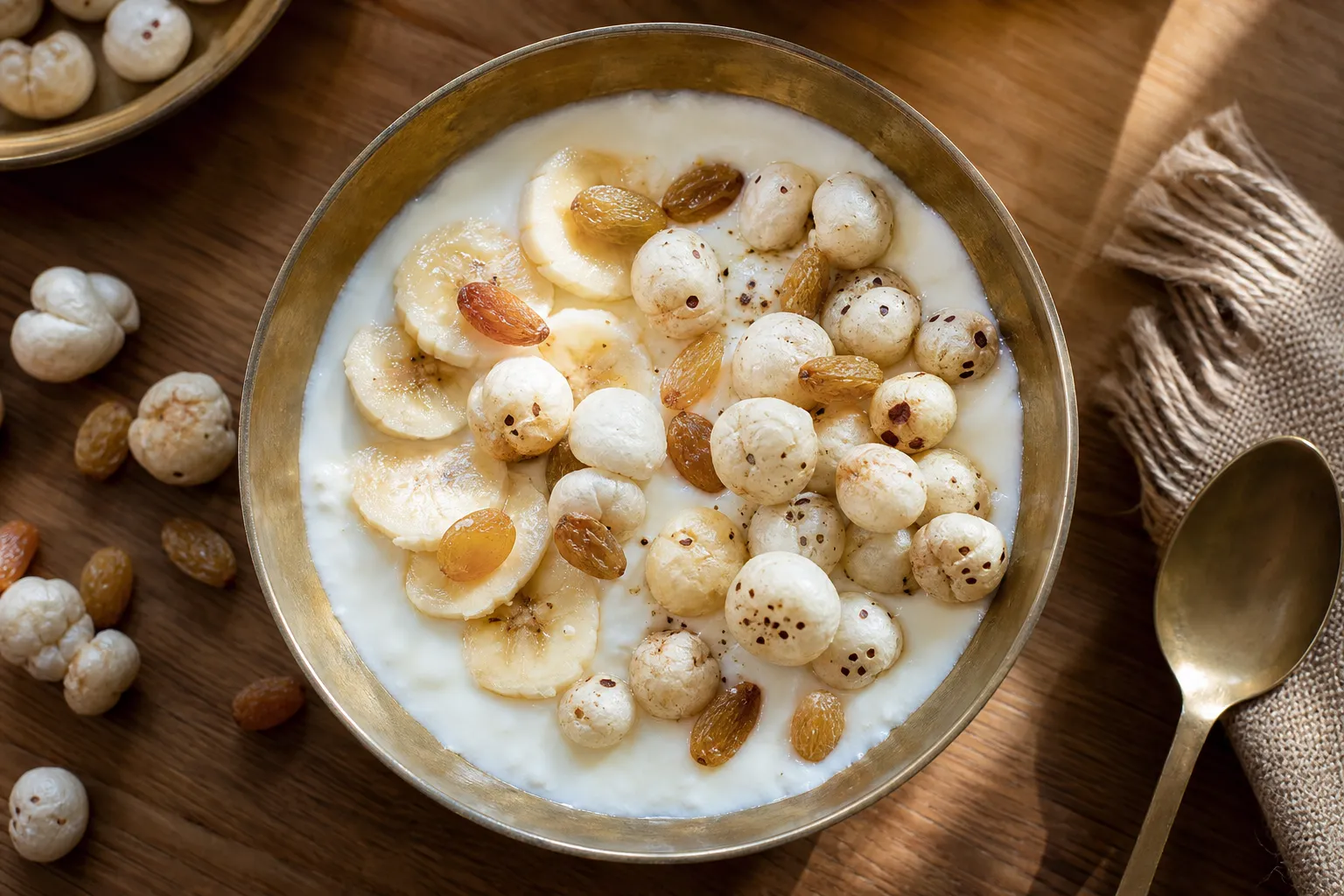
Recipe 4: Makhana fruit and curd bowl
This is the no-fuss option for busy fasting days, especially when you want something cool and not too spicy.
Ingredients
- 1 cup roasted makhana
- 1 cup thick curd
- 1 small banana or apple, chopped
- 1 tablespoon raisins or chopped dates
- 1 tablespoon roasted peanuts or almonds
- ¼ teaspoon cardamom powder
- Honey or mishri, optional and only if your fast allows
Method
Roast makhana until crisp and let it cool. Whisk curd with cardamom. Add fruit, raisins or dates, and nuts. Add makhana just before eating so it keeps some crunch.
For a sweeter bowl, add a little honey or powdered mishri. For a more filling bowl, add extra peanuts or almonds.
Illustration
How much to make for fasting days
For one person, 1–2 cups of roasted makhana is usually enough for a snack recipe. For kheer or curry, 1 cup expands well once cooked with milk or curd. If guests are coming for Navratri, roast a larger batch plain and season it in smaller portions. This keeps it flexible for people who prefer less chilli, less salt or a sweeter flavour.
Store makhana in an airtight jar after opening. If it loses crunch, roast it again on low heat for a few minutes.
A simple vrat plan using makhana
Here is an easy way to use the four recipes without repeating the same flavour all day:
- Morning: fruit and curd bowl with roasted makhana.
- Afternoon: aloo-makhana dahi curry with sama rice, if your fast allows.
- Evening: roasted makhana namkeen with tea or lemon water.
- Night or prasad: a small bowl of makhana kheer.
Makhana’s biggest strength is not that it is fancy. It is that it is simple. With one pack, you can make something crisp, creamy, sweet or savoury in minutes — exactly what helps during a busy Navratri or Ekadashi day.
This article is for general information and is not a substitute for medical advice.
Planning your vrat menu? For namkeen, kheer and fasting bowls, Kashvee Jumbo Makhana gives big, even pops — hand-graded at 19 mm and up, plain, with nothing added. For everyday cooking, Kashvee Classic Makhana (15.85 mm and up) works just as well, and both are delivered free across India.
Sources
- Monitoring the sale of food items during festival season — FSSAI
- ICAR-National Research Centre for Makhana — ICAR
- Makhana: a high-valued aquatic food crop — Scientia Horticulturae
- Physical, gravimetric and functional characterization of popped gorgon nut — Journal of Food Science and Technology
- Indian Food Composition Tables, 2017 — ICMR-NIN via FAO
- Mithila Makhana GI details — APEDA
- 2026 Ekadashi dates for Delhi — Drik Panchang
- Sharad Navratri 2026 dates for New Delhi — AstroSage Panchang