Makhana nutrition per 100 g, explained
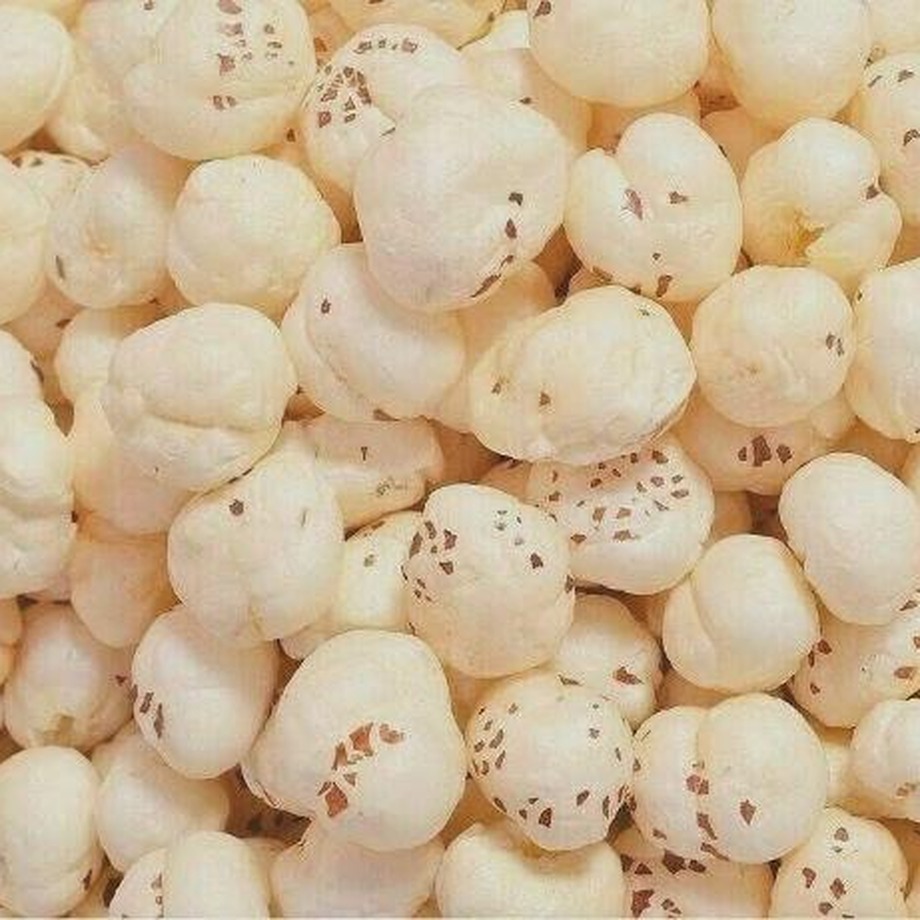
Plain popped makhana is mostly carbohydrate, with modest protein and very little fat. Good sources place plain makhana at roughly 350–358 kcal and about 8.7–9.7 g protein per 100 g, while fibre numbers vary because sources use different testing and labelling terms.
That means makhana is a light-feeling snack by volume, but 100 g is still a full bowlful, not a small nibble. For daily eating, it is better to understand both the 100 g number and a realistic handful.
Why makhana nutrition numbers vary online
Search for “makhana nutrition per 100 g” and you will see different numbers. Some pages say 347 kcal. Some say 358 kcal. Some show fibre as very low, while some retail packs show a higher dietary-fibre number.
This does not always mean someone is “wrong”. Makhana values can change because of:
- Product form: seed, popped makhana, oil-roasted makhana and flavoured makhana are not the same food.
- Moisture: drier makhana can look higher in nutrients per 100 g because there is less water in the sample.
- Processing: plain popped kernels differ from oil-roasted or seasoned snacks.
- Testing method: older food-composition tables may report “crude fibre”, while modern labels may use “dietary fibre”.
- Brand recipes: added oil, salt, sugar, masala or milk powder changes the label.
For Kashvee’s plain makhana, think of the pack as a single-ingredient popped kernel: nothing fried, nothing added, no added preservatives. If you season or roast it at home, the oil, ghee, salt or sugar you add becomes part of the final nutrition.
The most useful per-100 g range
For plain popped makhana, the most defensible summary from government and food-science sources is:
- Energy: about 350–358 kcal per 100 g
- Protein: about 8.7–9.7 g per 100 g
- Fat: very low in plain popped makhana in Indian sources, around 0.1–0.5 g per 100 g
- Carbohydrate: high, roughly 77–85 g per 100 g in commonly cited sources
- Fibre: read carefully; crude-fibre and dietary-fibre values are not directly interchangeable
The PMFME/NIFTEM write-up on foxnut lists popped makhana at 358 kcal, 79.8% carbohydrate, 8.7% protein, 0.5% fat, 10.4% moisture and 0.2% crude fibre. A food-science paper on popped gorgon nut cites 76.9% carbohydrate, 9.7% protein, 0.1% fat and 12.8% moisture. A horticulture review reports popped makhana at 84.9% carbohydrate, 9.5% protein, 4% moisture and 0.5% fat.
So, instead of treating one viral number as fixed, use a practical range. For plain makhana, about 350–360 kcal and about 9 g protein per 100 g is a reasonable everyday reading.
Calories: why makhana is light, but not calorie-free
Makhana feels light because popped kernels are airy. That makes a bowl look large even when the weight is modest. But nutrition labels are based on weight, not how big the bowl looks.
FSSAI’s labelling rules use energy conversion factors such as 4 kcal per gram for carbohydrate, 4 kcal per gram for protein, 9 kcal per gram for fat and 2 kcal per gram for dietary fibre. Since plain makhana is mostly carbohydrate, most of its calories come from carbohydrate, not from fat.
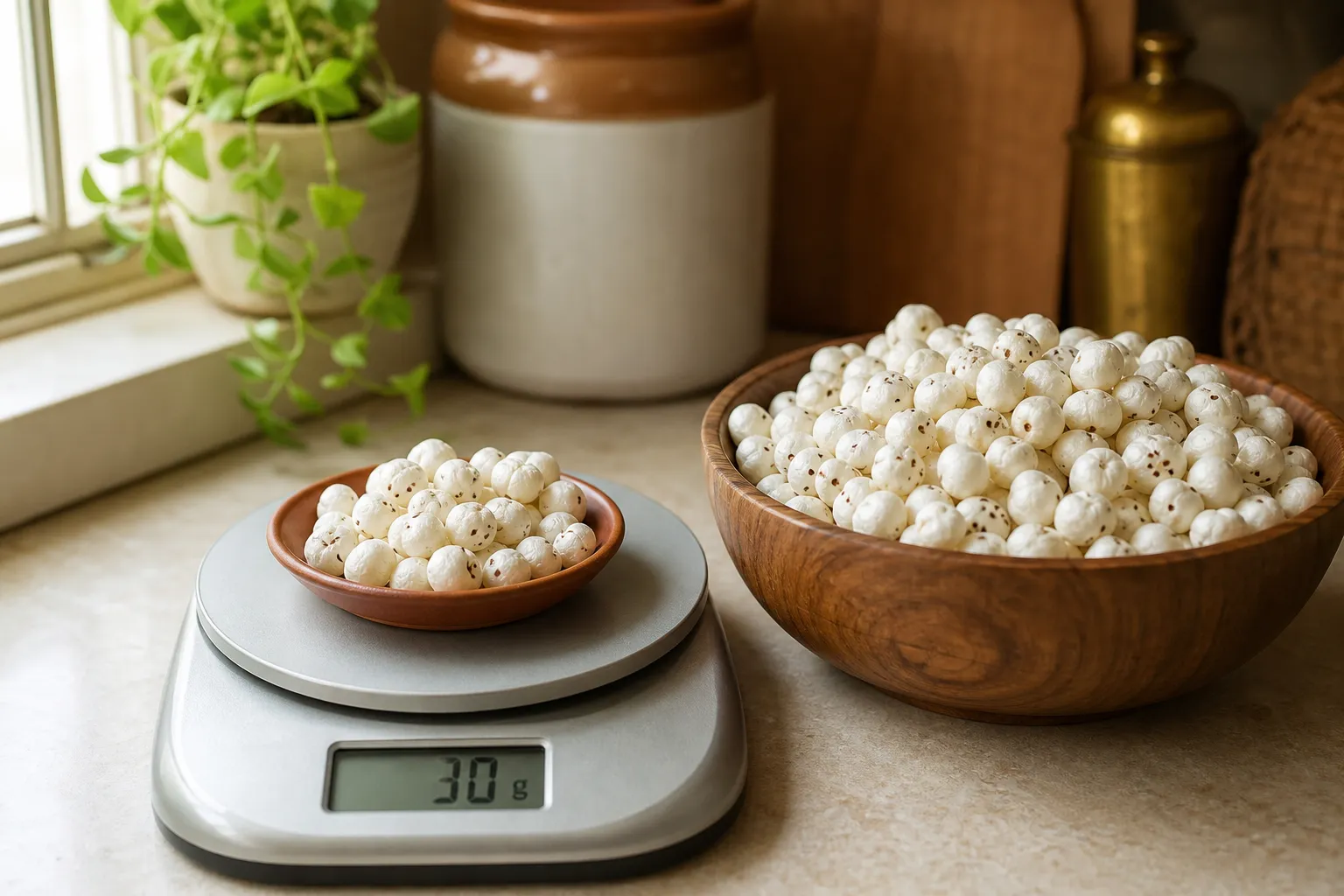
A 100 g portion is quite large for snacking. A more realistic dry snack portion is often around 25–30 g before adding oil or ghee. Using the 358 kcal PMFME figure as a simple reference:
- 25 g plain makhana: about 90 kcal
- 30 g plain makhana: about 107 kcal
- 50 g plain makhana: about 179 kcal
Once you roast it with ghee, oil, jaggery or chocolate, the number changes quickly. That is why plain makhana and flavoured snack packs should not be compared as if they were identical.
Illustration
Protein: useful, but not a “high-protein meal” by itself
Makhana contains protein, but it is not a concentrated protein food like dal, paneer, soy, eggs or meat. At about 8.7–9.7 g protein per 100 g, a 30 g serving gives roughly 2.6–2.9 g protein before any milk, curd, nuts or dal is added to the meal.
That is still useful in a snack. It simply means makhana should be described honestly: a light, starchy, low-fat popped seed with some protein — not a full protein replacement.
If you want a more balanced snack, pair makhana with another protein source. For example:
- roast plain makhana and eat it with curd,
- add it to milk-based kheer,
- use it in a light sabzi with peas or paneer,
- serve it with dal-based meals instead of fried namkeen.
For recipe ideas, you can also see our quick guide to /blog/roasted-makhana-recipes and the vrat-friendly ideas in /blog/makhana-for-vrat.
Fibre: the number needs careful reading
Fibre is the trickiest part of makhana nutrition. The PMFME/NIFTEM table reports crude fibre for popped makhana, while modern nutrition labels and FSSAI definitions talk about dietary fibre. These are related ideas, but they are not the same label term.
This is why you may see very different fibre values in different places. A source may be reporting crude fibre, dietary fibre, fibre in a different variety, or fibre in an oil-roasted product. Some online pages also copy values without clearly saying whether the food is plain popped makhana, dry seed or a flavoured snack.
The practical advice is simple: if fibre is important to you, compare the same label line across products. Look for “dietary fibre per 100 g” on the pack, not just a random internet number. Also look at the ingredient list; fibre in a flavoured product may come along with oil, sugar, starches or seasonings.
Why per 100 g is not the same as “per bowl”
Per-100 g numbers are useful because they let you compare foods fairly. FSSAI also uses per-100 g or per-serving nutrition information as part of packaged-food labelling.
But makhana is bulky, so 100 g can look like a lot. If you are eating it as a tea-time snack, your actual portion may be closer to 25–30 g. If you are making kheer, curry or a family snack bowl, the amount may be higher, and the milk, sugar, oil or ghee will matter just as much as the makhana.
Here is a simple way to think about it:
- For counting calories: weigh the dry makhana before adding fat or sugar.
- For protein: remember that 30 g gives only a few grams of protein.
- For fibre: use the pack’s own “dietary fibre” line when available.
- For recipes: include the nutrition of milk, nuts, oil, ghee, jaggery or spices separately.
Plain vs roasted vs flavoured makhana
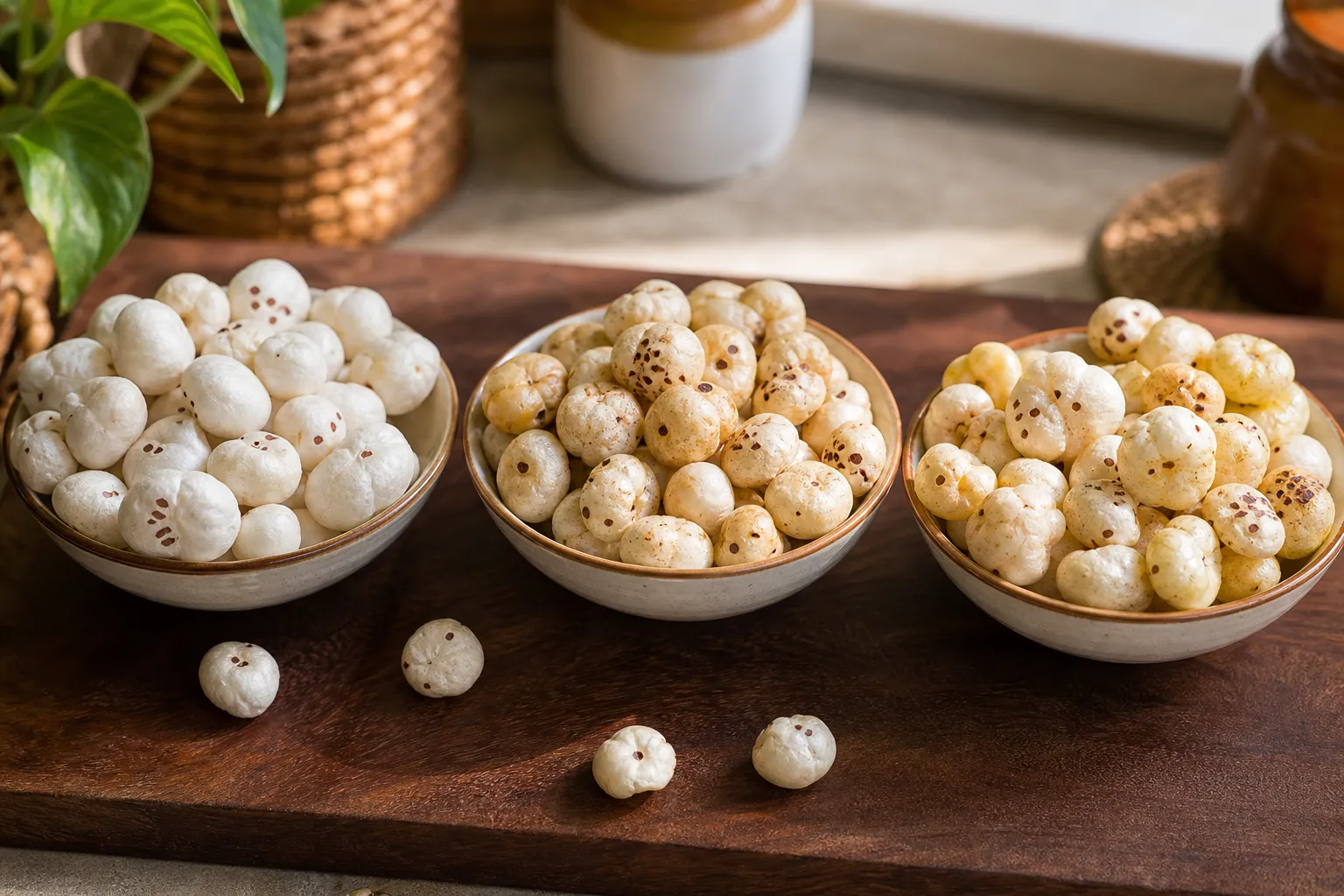
Plain makhana is the white popped kernel. It is not the same as a ready-to-eat masala pack.
When you dry-roast makhana at home without oil, the weight may reduce slightly as moisture leaves, but you are not adding fat. When you roast it with ghee or oil, calories and fat increase. When you add sugar, jaggery or chocolate, carbohydrate and calories increase. When you add salt, sodium increases.
This matters because some sources describe “roasted and popped kernels” made with oil. Those numbers should not be used for a plain single-ingredient pack. Always check whether the source is talking about plain popped makhana, oil-roasted makhana or a snack mix.
Illustration
How to read a makhana label
When buying makhana, read the label in this order:
- Ingredient list: for plain makhana, it should be a single ingredient.
- Nutrition per 100 g: compare energy, protein, carbohydrate, fat and sodium.
- Serving size: check whether the brand calls 20 g, 25 g or 30 g a serving.
- Added oil or flavouring: this changes the nutrition more than many people expect.
- Quality clues: whole, well-popped pieces are easier to roast evenly and use in kheer.
If you want help with physical quality, read /blog/how-to-spot-good-makhana. For size selection, /blog/jumbo-vs-classic-makhana explains when a larger pop is useful and when everyday size is enough.
What this means for everyday eating
Makhana works well when you want a crunchy snack that is not deep-fried. It is also useful in Indian cooking because it can go into kheer, sabzi, curry, vrat recipes and quick roasted snacks.
But the best way to use it is with balance. Treat it as a light popped seed, not as a magic food. Keep portions sensible, use less added fat and salt when roasting, and combine it with protein-rich foods when you want a fuller meal.
For snacking, kheer and gifting, Kashvee /retail/jumbo-makhana is the better fit because the larger hand-graded pops feel special in a bowl or sweet dish. For everyday cooking, roasting and regular home use, Kashvee /retail/classic-makhana is practical and still contains no broken or small pieces in the pack.
This article is for general information and is not a substitute for medical advice.
Sources
- PMFME — Foxnut (Makhana) — NIFTEM
- Physical, gravimetric and functional characterization of various milling fractions of popped gorgon nut — Journal of Food Science and Technology / PMC
- Makhana (Euryale ferox Salisb.): A high-valued aquatic food crop with emphasis on its agronomic management — Scientia Horticulturae
- Food Safety and Standards (Labelling and Display) Regulations, 2020 — FSSAI
- Food Safety and Standards Labelling and Display Compendium, Version VIII — FSSAI
- Direction on declaration of RDA contribution — FSSAI