Makhana kheer recipe for Diwali and Chhath
Makhana kheer is a gentle, festive dessert made by simmering lightly roasted makhana in milk until it turns creamy and soft. For Diwali on 8 November 2026 and Chhath Puja on 15 November 2026, it is a lovely make-at-home sweet because it feels traditional without needing deep frying or complicated prep.
This version keeps the flavour simple: milk, makhana, sugar, cardamom and a few nuts if your family uses them. It works as a warm dessert after a Diwali meal, and it can also be adapted for vrat-style cooking if milk and the add-ins fit your family’s fasting rules.
Why makhana kheer feels right for festivals
Kheer has a comforting place in Indian homes: it is soft, fragrant and easy to share in small bowls. Makhana makes it especially festive because the pops soak up milk slowly, giving the kheer a pleasing bite at first and a thick, creamy body after resting.
Makhana also connects naturally with Bihar and the Mithila region. The crop, botanically known as Euryale ferox, is an aquatic crop associated with ponds and waterlogged areas. ICAR has described makhana as a crop grown in stagnant perennial water bodies such as ponds and swamps, and official GI records list “Mithila Makhana” as a registered Geographical Indication from Bihar.
For Chhath, many families keep food traditions very carefully, and rules vary by home. If your family prepares kheer as part of a vrat meal, keep the recipe plain and check every add-in: sugar or jaggery, nuts, saffron, cardamom and even the vessel used. If you are planning a fuller vrat menu, you may also like our guide: Makhana for vrat: staple + 4 easy recipes.
Ingredients for 4–5 small servings
Use this as a base and adjust sweetness at the end.
- 1 litre full-cream milk
- 1½ cups plain makhana
- 3–4 tablespoons sugar, or to taste
- ½ teaspoon cardamom powder
- 1 tablespoon chopped cashews or almonds, optional
- 1 tablespoon raisins, optional
- A few saffron strands, optional
- 1 teaspoon ghee for roasting, optional
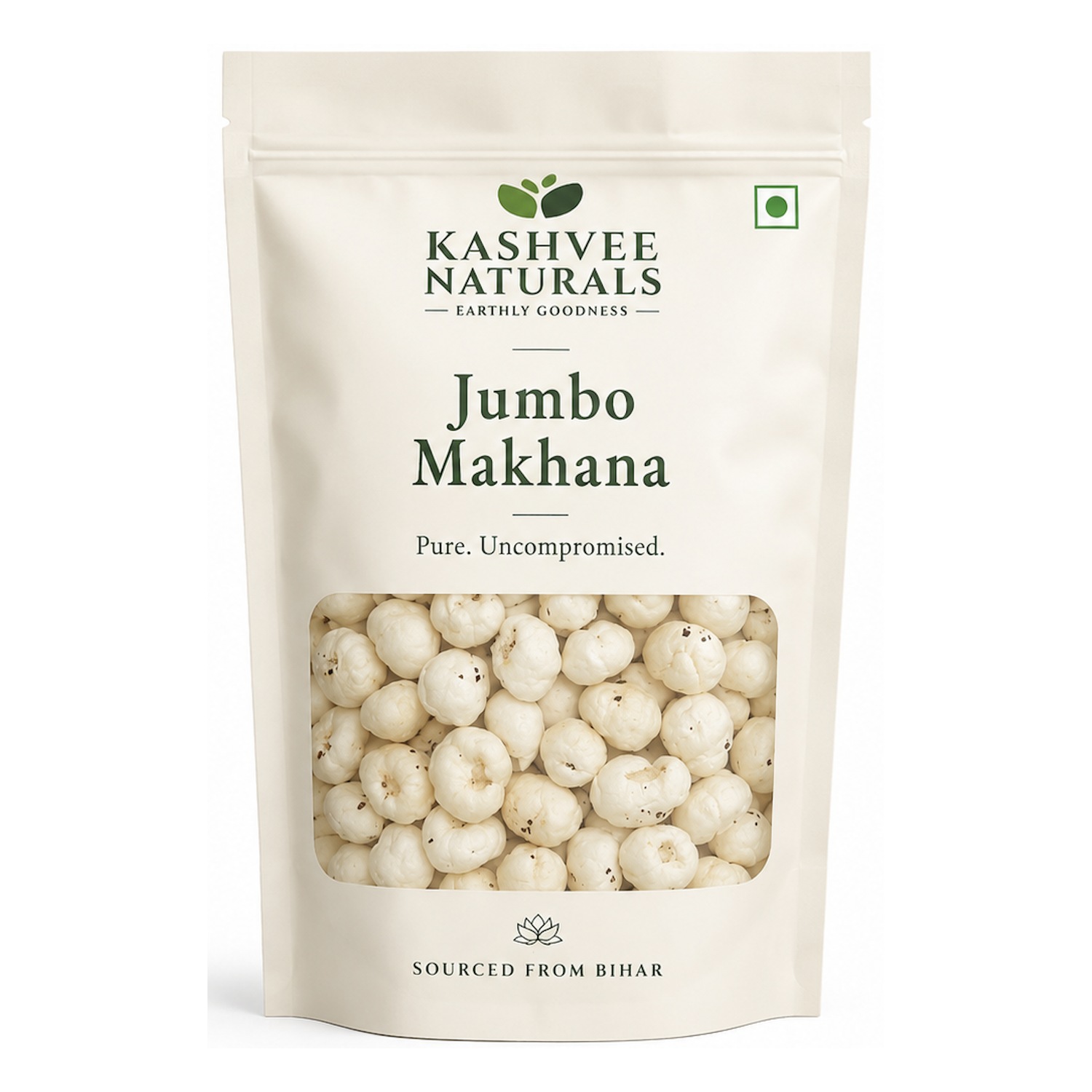
Use Kashvee Jumbo Makhana — Shop →
If you prefer a lighter kheer, use a little less makhana or add ¼ cup warm milk at the end. If you like a thick, rabri-style bowl, simmer it longer and let it rest before serving.
Step-by-step makhana kheer recipe
1. Roast the makhana gently
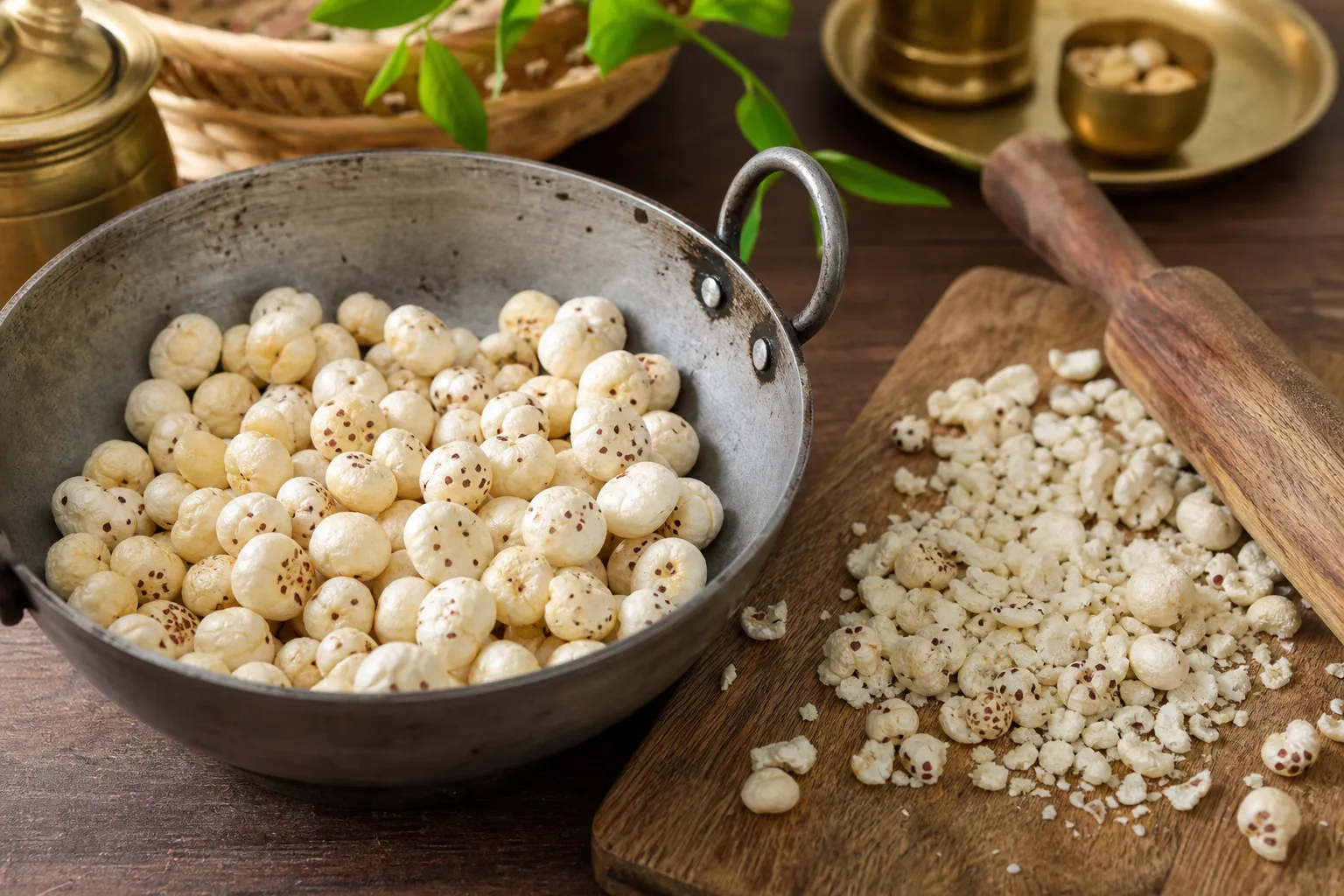
Place the makhana in a heavy kadai or pan. Roast on low heat for 5–7 minutes, stirring often, until the pops turn crisp. You can dry-roast them, or use 1 teaspoon ghee for a richer festival flavour.
The aim is not to brown them deeply. You only want the makhana to become crisp enough to crush lightly. If they turn too brown, the kheer can taste more toasted than creamy.
2. Crush some, keep some whole
Let the roasted makhana cool for a minute. Crush about half of it roughly with your hands or a rolling pin. Keep the rest whole.
This small step improves texture: the crushed makhana thickens the milk, while the whole pops make the kheer feel generous in the bowl.
Illustration
3. Simmer the milk
Bring the milk to a gentle boil in a thick-bottomed pan. Lower the heat and simmer for 8–10 minutes, stirring the base and sides so the milk does not catch.
Milk-based sweets need clean utensils and careful handling, especially in festive seasons when sweets and milk products are prepared in larger quantities. FSSAI’s guidance on traditional milk products stresses hygiene, sanitation and consuming sweets within their shelf life.
4. Add makhana and cook slowly
Add the crushed and whole makhana to the simmering milk. Cook on low heat for 12–18 minutes, stirring every few minutes. The makhana will soften and the milk will reduce slightly.
If you want a very smooth kheer, cook it longer and press a few softened makhana pieces against the side of the pan. If you want a lighter texture, stop while the whole pieces still hold their shape.
5. Sweeten near the end
Add sugar and stir until dissolved. Add cardamom powder, saffron if using, and nuts or raisins if your family likes them. Simmer for 2–3 minutes more.
Taste after the sugar dissolves. Kheer tastes slightly less sweet when chilled, so adjust depending on whether you plan to serve it warm or cold.
6. Rest before serving
Switch off the heat and let the kheer rest for 10–15 minutes. It will thicken as it sits. Serve warm for a soft, homely dessert, or chill it for a firmer, more festive pudding-like bowl.
Diwali serving idea
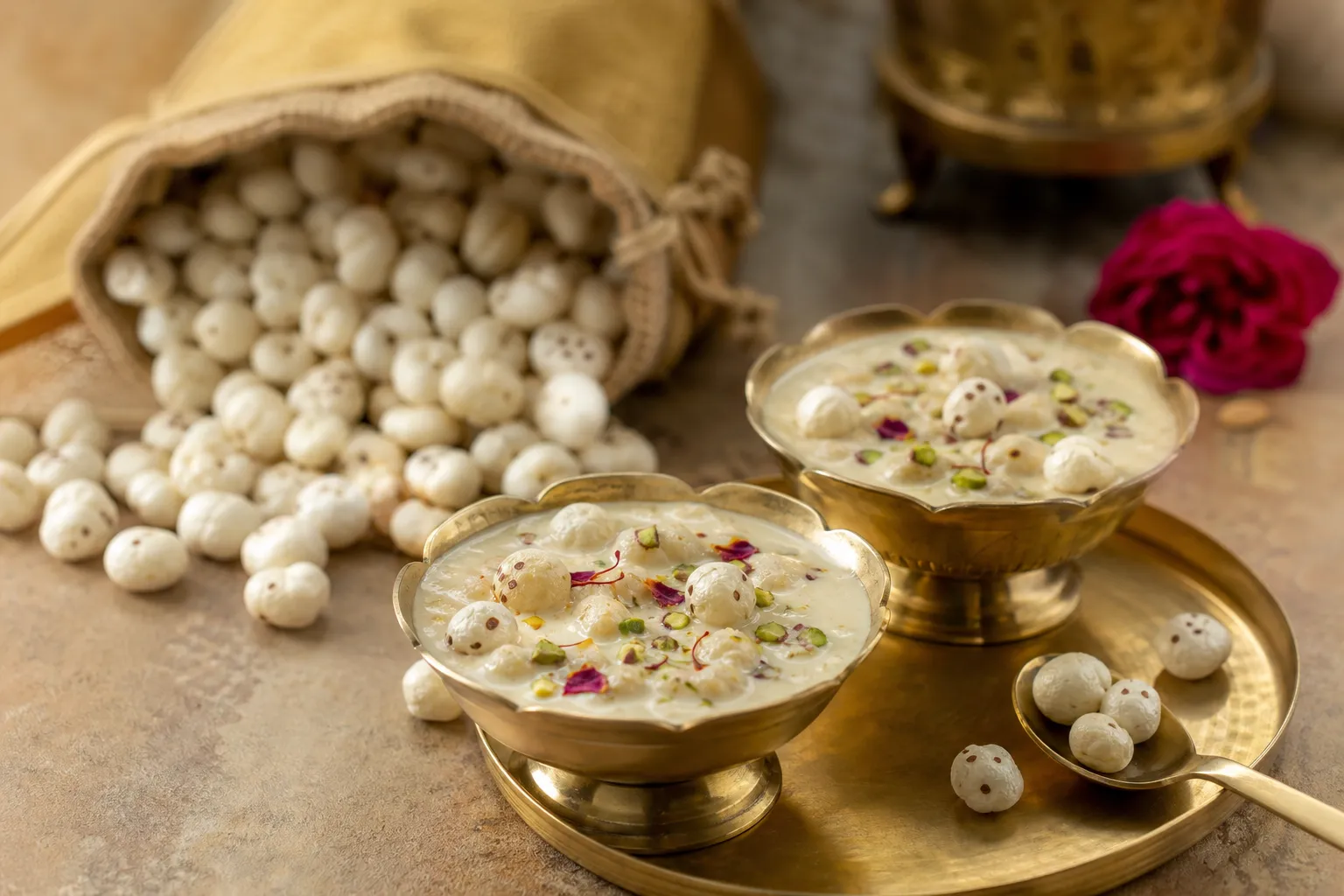
For Diwali, serve makhana kheer in small bowls after the main meal or with a simple tray of homemade sweets. Garnish with sliced almonds, pistachios or a few saffron strands if you use them at home.
If guests are coming, make the kheer slightly thinner than you want it to be. It thickens while resting and thickens further in the fridge. Keep a little warm milk ready so you can loosen it just before serving.
A bigger makhana size looks beautiful in kheer because some pieces remain visible even after simmering. If you are buying for kheer, snacking or gifting, Jumbo makhana is the more festive-looking choice.
Chhath and vrat notes
Chhath food is deeply personal and often follows family, village or regional practice. Keep the kheer as simple as your tradition requires. Many homes avoid tasting food during preparation for offerings, while others make separate portions for family eating. Follow your own household rules.
A few practical tips:
- Use a clean, dedicated pan and spoon if the kheer is for a vrat meal.
- Keep add-ins minimal: milk, makhana, sugar and cardamom may be enough.
- Skip nuts or raisins if they are not used in your home’s Chhath cooking.
- Do not mix leftover kheer back into a fresh batch.
For more vrat ideas using makhana, see Makhana for vrat.
How to choose makhana for kheer
Good makhana should look clean, evenly popped and pleasantly white to off-white. Very small, broken or powdery pieces can make kheer cloudy and uneven. A few natural marks are normal, but avoid packs with too much breakage or stale smell. We have a full buying guide here: How to spot good makhana before you buy.
For this recipe, Kashvee Jumbo works well when you want visible, plump pieces in a festive bowl. Kashvee Classic is useful for everyday cooking, especially when you plan to crush the makhana for thicker kheer.
Kashvee plain makhana is a single-ingredient food: white popped kernels with nothing added and no added preservatives. The packs are hand-graded by size, with Jumbo at 19 mm and up and Classic at 15.85 mm and up, so small and broken pieces do not go into the pack.
Illustration
Storage and reheating
Because this is a milk-based dessert, cool it promptly after serving and refrigerate leftovers in a covered container. Food safety guidance from FoodSafety.gov says perishable foods should be refrigerated within 2 hours, or within 1 hour in temperatures above 90°F / 32°C.
Makhana kheer thickens in the fridge. To reheat, add a splash of milk and warm it on low heat, stirring often. Do not boil it aggressively after chilling; gentle heating keeps the texture smoother.
A small nutrition note
Makhana is mainly carbohydrate, with some protein and very little fat in the seed itself. Published food science literature has reported makhana composition around 76–77% carbohydrate, about 9–10% protein and very low fat, though values vary by sample and processing. In kheer, the final nutrition depends heavily on milk, sugar, ghee and nuts, so treat it as a festive dessert rather than an everyday “health food”.
For a festive kheer where whole pieces should show, choose Kashvee Jumbo Makhana. For regular home cooking where you often crush or powder makhana, Kashvee Classic Makhana is a practical everyday pack. Both are plain makhana sourced from the Mithila makhana belt of Bihar, packed in Hajipur, Vaishali.
This article is for general information and is not a substitute for medical advice.
Sources
- Diwali 2026 date — Drik Panchang
- 2026 Chhath Puja, Patna — Drik Panchang
- Swarna Vaidehi: First Ever Variety of Makhana Released in India — ICAR
- Mithila Makhana GI application details — Intellectual Property India
- Physical, gravimetric and functional characterization of popped gorgon nut — Journal of Food Science and Technology
- Guidance Note on Safety and Quality of Traditional Milk Products — FSSAI
- 4 Steps to Food Safety — FoodSafety.gov